
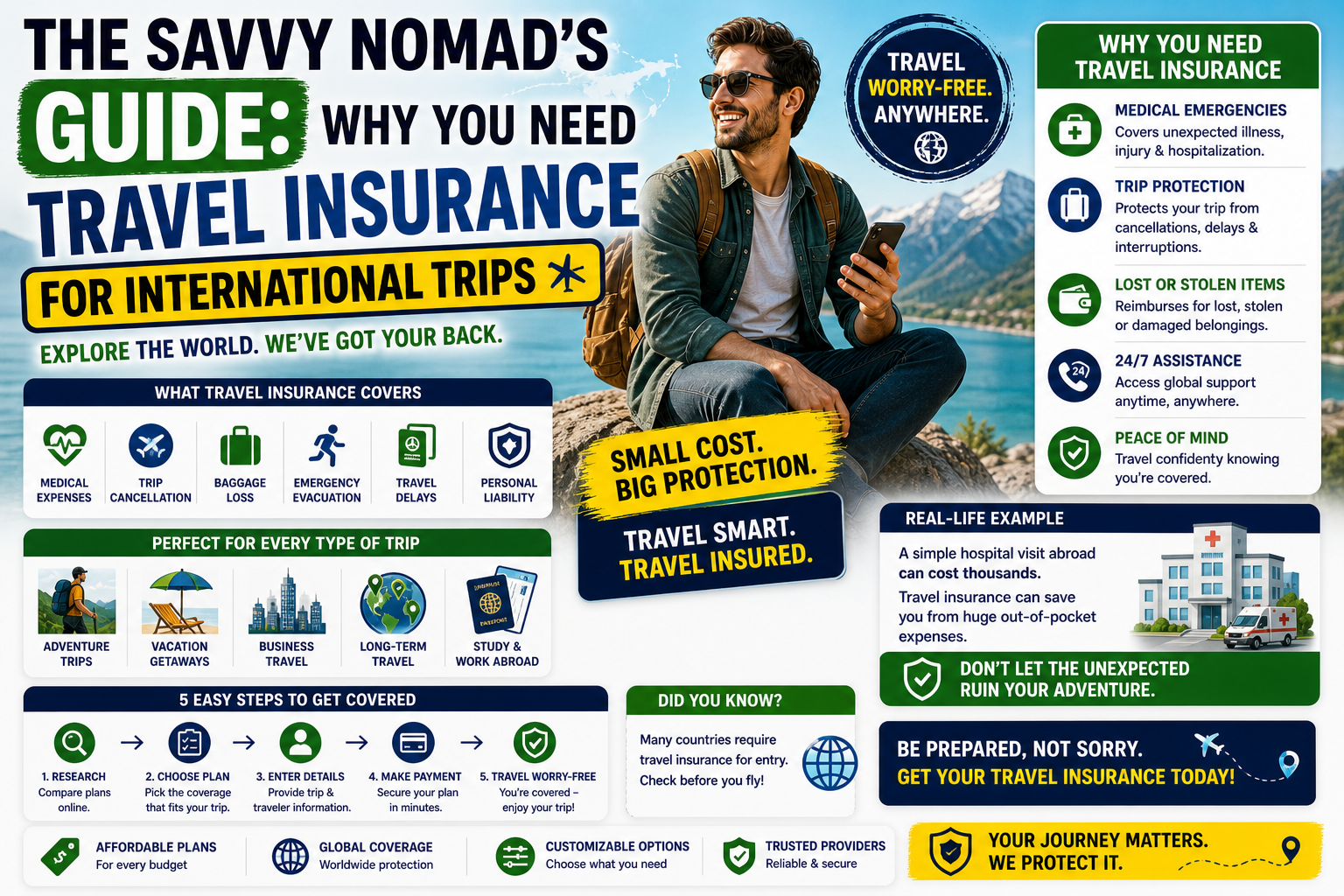
Planning a getaway? Learn how to choose the best travel insurance for international trips to cover medical emergencies, cancellations, and lost luggage in 2026.
Table of Contents
There’s a specific kind of magic that happens when you finally click “book” on a flight to a destination you’ve been dreaming about for years. Whether it’s the neon-soaked streets of Tokyo, the rugged cliffs of the Amalfi Coast, or a quiet vineyard in Mendoza, the anticipation is half the fun. You’ve got your itinerary mapped out, your out-of-office reply drafted, and your suitcase half-packed. But then, that little box pops up at the checkout: “Add travel insurance?”
I’ll be the first to admit that it’s tempting to skip it. We’ve already spent a small fortune on non-refundable boutique hotels and guided tours, so adding another expense feels like a buzzkill. We like to think we’re invincible—that the airline won’t lose our bags and we certainly won’t trip over a cobblestone and sprain an ankle. But after a decade of traversing the globe, I’ve learned that travel insurance for international trips isn’t just an “add-on”—it’s the only thing that stands between a minor hiccup and a total financial disaster.
The Reality of Global Exploration in 2026
The world has changed quite a bit recently. While travel is back in full swing, the logistics have become a bit more… shall we say, “temperamental.” Flight delays are more common, luggage seems to have a mind of its own, and the cost of medical care in foreign countries is skyrocketing. When you invest in travel insurance for international trips, you aren’t just buying a piece of paper; you’re buying peace of mind. You’re ensuring that if your flight is canceled due to a sudden strike or a freak weather event, you aren’t the one stuck footing the bill for a last-minute $800 airport hotel stay.
Most people think of insurance as something for “big” disasters, but it’s often the small things that save the day. I once had a friend lose her passport in the middle of a crowded market in Marrakesh. Because she had a solid policy for travel insurance for international trips, the insurance company provided 24/7 concierge support to help her navigate the embassy and reimbursed her for the extra nights she had to stay while waiting for emergency documents. It turned a week of panic into a slightly extended, albeit stressed, holiday.
Decoding the “Big Three” Coverage Areas
If you’re new to shopping for protection, the jargon can be overwhelming. To find the right travel insurance for international trips, you need to focus on three main pillars:
1. Emergency Medical and Evacuation
This is the big one. Many travelers don’t realize that their domestic health insurance (especially in the US) rarely provides full coverage outside their home borders. If you need an emergency appendectomy in Switzerland or a medevac flight from a remote island in Indonesia, the costs can easily exceed $100,000. Comprehensive travel insurance for international trips should provide at least $100,000 to $250,000 in medical coverage and a significantly higher amount for emergency evacuation.
2. Trip Cancellation and Interruption
Life happens. Maybe you get sick two days before departure, or a family emergency requires you to fly home halfway through your trip. Without travel insurance for international trips, you’re on the hook for those non-refundable costs. A good policy will reimburse you for the prepaid portions of your trip that you can’t use.
3. Baggage and Personal Belongings
We’ve all seen the videos of “baggage graveyards” at major hubs. While airlines are legally required to provide some compensation, it’s often a pittance compared to the actual value of your tech, gear, and clothes. Having travel insurance for international trips ensures that if your suitcase disappears into the void, you can at least replace your essentials without draining your savings.
Why Credit Card Insurance Often Falls Short
I often hear people say, “Oh, I’m covered by my credit card.” While many premium cards (like the Chase Sapphire Reserve or Amex Platinum) offer great perks, they usually have significant gaps compared to dedicated travel insurance for international trips.
Card insurance is often secondary, meaning you have to fight with the airline or your primary insurer first. Also, the medical limits are usually quite low, and “Medical Evacuation” is rarely covered to the degree you might need. I view card benefits as a nice “backup,” but for a multi-week journey across continents, I always opt for a standalone policy for travel insurance for international trips. For a deeper dive into the legalities of consumer protection in travel, the U.S. Department of State provides excellent resources on why local coverage is rarely enough.
The Nuance of “Cancel for Any Reason” (CFAR)
If you’re a bit of a nervous traveler, you might want to look into CFAR riders. Standard travel insurance for international trips only covers specific “covered reasons” (like illness, death in the family, or jury duty). If you just decide you’re too stressed to go or you don’t like the look of the political climate at your destination, a standard policy won’t pay out.
CFAR allows you to walk away from your trip for literally any reason and usually get back 50% to 75% of your costs. It’s more expensive, and you usually have to buy it within 14 days of your initial trip deposit, but for high-stakes, expensive vacations, it’s a brilliant feature to include in your travel insurance for international trips.
Navigating Pre-Existing Conditions
This is a major sticking point for many travelers. If you have a chronic illness, you need to be very careful when selecting travel insurance for international trips. Most policies exclude “pre-existing conditions” unless you meet very specific criteria—usually buying the insurance very shortly after your first trip payment and being “medically stable” for a certain period.
Don’t skip the fine print here. If you have an issue abroad and the insurer finds it’s related to something in your past that wasn’t disclosed or waived, they can deny the claim. To get the best travel insurance for international trips, look for policies that offer a “Pre-existing Condition Waiver.” It’s a small extra step that ensures you aren’t left stranded because of a flare-up. You can find technical definitions of these terms on Wikipedia’s Travel Insurance page.
Adventure Sports and High-Risk Activities
Are you planning on scuba diving in the Great Barrier Reef? Bungee jumping in New Zealand? Or maybe just renting a moped in Bali? You need to check if your travel insurance for international trips actually covers these activities.
Many standard policies consider these “high-risk” and will exclude injuries resulting from them. You often need to add an “Adventure Sports Rider” to your travel insurance for international trips. I’ve seen people assume they were covered for a simple hike, only to find out that “trekking above 3,000 meters” was an exclusion. Always double-check your itinerary against your policy’s list of excluded activities.
The Importance of 24/7 Assistance Services
When you’re in a different time zone and don’t speak the local language, having a “lifeline” is vital. One of the most underrated benefits of travel insurance for international trips is the 24/7 emergency assistance hotline.
These aren’t just for insurance claims; they are for logistics. They can help find a local doctor who speaks English, arrange for a translator, or help wire emergency funds if your wallet is stolen. For me, this human element is what makes travel insurance for international trips so valuable. It’s like having a professional fixer in your pocket.
How to Compare and Save on Your Policy
You don’t have to spend a fortune to get great coverage. When shopping for travel insurance for international trips, use comparison sites like InsureMyTrip or SquareMouth.
- Don’t over-insure: If your flights are refundable, don’t include them in the “Trip Cost” to lower your premium.
- Check the Deductibles: Choosing a $250 deductible can significantly lower the price of travel insurance for international trips.
- Annual vs. Single Trip: If you take more than two or three overseas trips a year, an “Annual Multi-Trip” policy is almost always cheaper than buying individual travel insurance for international trips each time.
Digital Nomads and Long-Term Travelers
If you’re part of the growing “Remote Work” tribe and don’t have a return ticket, your needs are different. Standard travel insurance for international trips often requires you to have a return flight booked.
For the long-term nomad, companies like SafetyWing or World Nomads offer subscription-style travel insurance for international trips. You pay monthly, and the coverage remains active as long as you’re paying, often even including some limited coverage back in your home country. This flexibility is essential for the modern traveler who doesn’t follow a traditional 10-day vacation schedule.
FAQ Section
1. Is travel insurance for international trips mandatory? For most countries, no. However, since 2020, some destinations (like Qatar or certain Caribbean islands) have made it a requirement for entry. Even if it’s not legally required, it is strongly recommended because the cost of a medical emergency abroad can be life-altering.
2. When should I buy travel insurance for international trips? Ideally, you should buy it as soon as you make your first trip deposit (like booking a flight). This ensures you’re covered for “Trip Cancellation” immediately. Many of the best features, like the pre-existing condition waiver, are only available if you buy the travel insurance for international trips within 10–21 days of your first booking.
3. Does travel insurance for international trips cover COVID-19? In 2026, most major policies treat COVID-19 like any other illness. If you get sick and can’t travel, or need medical care abroad, your travel insurance for international trips should cover it, provided you didn’t ignore government travel warnings.
4. Can I buy travel insurance for international trips if I’m already abroad? It’s much harder. Most companies require you to be in your home country when you purchase the policy. A few specialized nomad insurers allow it, but there is usually a 48-to-72-hour waiting period before the travel insurance for international trips becomes active to prevent “fraudulent” claims after an injury has already occurred.
5. Does it cover “Acts of God” or terrorism? Most comprehensive travel insurance for international trips will cover trip cancellation or interruption due to a terrorist incident in your destination city. “Acts of God” (like volcanic eruptions or hurricanes) are also covered, provided the event hadn’t already happened when you bought the policy.
6. What is “Primary” vs. “Secondary” medical coverage? “Primary” means the insurance company pays the hospital directly or reimburses you first. “Secondary” means you have to try to claim from your home health insurance first. For the least amount of paperwork, always look for primary medical coverage in your travel insurance for international trips.
Conclusion
At the end of the day, travel is about stepping out of your comfort zone and embracing the unknown. It’s about the stories you’ll tell for decades. But you want those stories to be about the sunset over the Sahara, not the time you had to take out a second mortgage to pay for a broken leg in Montpellier.
