
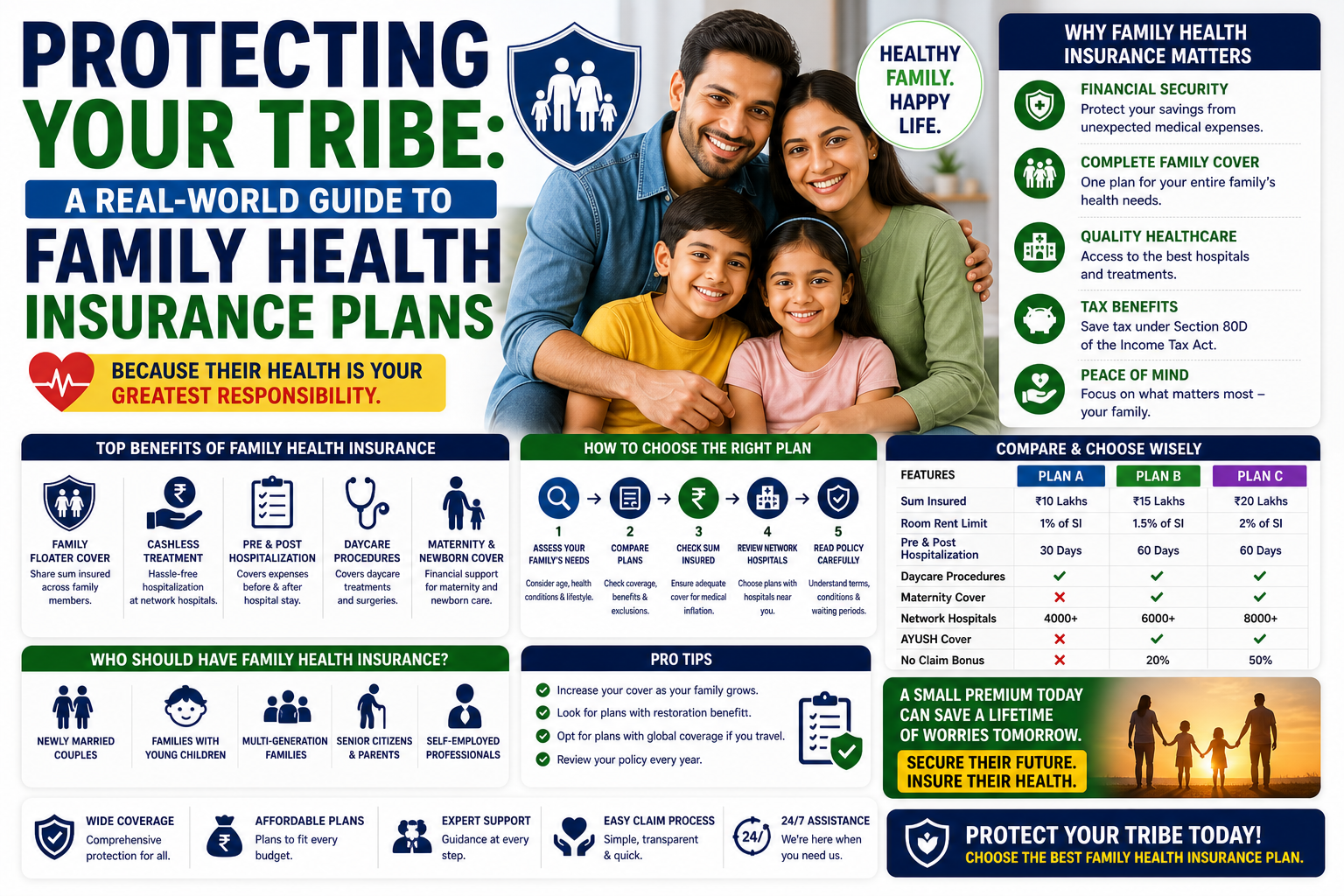
Navigating family health insurance plans doesn’t have to be a nightmare. Learn how to compare coverage, save on premiums, and protect your loved ones in 2026.
Table of Contents
If you’ve ever sat at your kitchen table with three different browser tabs open, trying to figure out why one deductible is $2,000 and the other is $8,000, you know that picking healthcare coverage feels a bit like trying to solve a Rubik’s cube in the dark. It’s stressful. As a parent or a head of a household, that stress is amplified because you aren’t just making a choice for yourself; you’re responsible for the well-being of your kids, your partner, and sometimes aging parents. Finding the right family health insurance plans isn’t just a financial chore—it’s about buying peace of mind for those middle-of-the-night fevers and unexpected trips to the ER.
In 2026, the landscape of medical coverage has shifted. We have more digital options than ever, with “telehealth-first” initiatives becoming the norm, but the sheer volume of choices can lead to a serious case of analysis paralysis. We’re all looking for that “Goldilocks” zone: a plan that doesn’t eat up half our paycheck but also won’t leave us stranded with a massive bill if someone breaks an arm at soccer practice. The truth is, the best family health insurance plans aren’t the most expensive ones—they’re the ones that actually fit your family’s unique medical rhythm and budget.
Why One Size Never Fits All in Family Coverage
Every family is a different ecosystem. You might have a toddler who seems to catch every bug at daycare, or a teenager who is a permanent resident at the local orthopedic clinic. Perhaps you’re managing a chronic condition like asthma or diabetes. This is why you can’t just pick the same family health insurance plans your neighbor has and expect it to work for you.
When you start looking at your options, you have to look past the monthly premium. I’ve seen too many people get seduced by a low monthly cost, only to realize that their “out-of-pocket maximum” is so high that they’re effectively paying for everything themselves anyway. A solid strategy is to look at your family’s medical history over the last two years. If you’re frequent flyers at the doctor’s office, a plan with a higher premium but a lower deductible might actually save you thousands in the long run.
Decoding the Jargon: HMO, PPO, and Beyond
Before you can settle on the right family health insurance plans, you have to speak the language. The insurance industry loves its acronyms, but for most families, it boils down to two main structures:
- PPO (Preferred Provider Organization): This is for the families who want flexibility. You don’t usually need a referral to see a specialist, and you can go out-of-network (though it’ll cost you more). If you have a specific specialist you already trust, a PPO is often the backbone of the best family health insurance plans.
- HMO (Health Maintenance Organization): This is usually more budget-friendly. You pick a primary care doctor who acts as a “gatekeeper” for all your care. It’s more restrictive, but the lower costs make it a very popular choice for healthy families who just need routine checkups.
There’s also the HDHP (High Deductible Health Plan) paired with an HSA (Health Savings Account). In my opinion, this is a “sleeper hit” for young, healthy families. You pay much less every month, and the money you put into your HSA is tax-advantaged and stays with you forever. It’s a great way to turn your family health insurance plans into a long-term savings tool while still having coverage for major catastrophes.
The Importance of the Provider Network
I cannot stress this enough: check the “Find a Doctor” tool before you sign anything. There is nothing more frustrating than finding great family health insurance plans only to realize your kids’ pediatrician or your favorite therapist isn’t in the network.
In 2026, many insurance companies are shrinking their networks to keep costs down. This means “narrow networks” are becoming more common. If you live in a rural area, you need to be especially careful that your family health insurance plans actually have providers within a reasonable driving distance. You can find excellent data on provider accessibility and quality ratings on the National Committee for Quality Assurance (NCQA) website.
Balancing Premiums vs. Out-of-Pocket Costs
This is where the real math happens. When comparing family health insurance plans, you have to look at the “Total Cost of Ownership.”
- Premium: What you pay every month just to have the card in your wallet.
- Deductible: What you pay out of your own pocket before the insurance company pays a cent.
- Co-insurance: Your share of the bill (like 20%) after you’ve met your deductible.
- Out-of-Pocket Maximum: The “Safety Net.” This is the absolute most you will have to pay in a year.
If you have a child with an ongoing health issue, the out-of-pocket maximum is the most important number in your family health insurance plans search. Once you hit that number, the insurance company picks up 100% of the tab for the rest of the year. For a family managing significant health needs, hitting that max early in the year can actually be a weird kind of financial relief.
The Rise of Telehealth and Digital Care
One of the best things about modern family health insurance plans is the integration of 24/7 virtual care. For a parent, being able to hop on a video call with a doctor at 10:00 PM when a kid has a mysterious rash is a game-changer.
Most top-tier family health insurance plans now include telehealth with a $0 copay. This doesn’t just save you money; it saves you a three-hour wait in a germ-filled urgent care lobby. When you are reviewing your options, check how robust their digital platform is. In 2026, a plan without a great app and easy virtual access is already behind the times. For a deeper look at the legalities and standards of these digital shifts, Wikipedia’s entry on Health Insurance in the US offers a solid historical and regulatory perspective.
Prescription Drugs: The Hidden Expense
Don’t forget the “Formulary.” This is the list of drugs your insurance covers and how much they cost. If someone in your house takes a brand-name medication, you need to verify which “tier” it falls into across different family health insurance plans.
I’ve seen families save $400 a month just by switching to a plan that put their specific medication on a lower cost tier. It takes ten minutes to look up your meds on the insurance company’s website, and it’s the easiest way to ensure your family health insurance plans don’t have a hidden “pharmacy tax” that drains your bank account.
Wellness Incentives: Getting Paid to Be Healthy
In an effort to keep people out of the hospital, many family health insurance plans now offer rewards for healthy behavior. We’re talking about “gym reimbursements,” free subscriptions to meditation apps like Calm or Headspace, and even cash rewards for completing a health assessment or getting a flu shot.
While a $200 wellness credit might not seem like much compared to a $15,000 annual premium, it’s a nice perk that adds value to your family health insurance plans. It shows that the insurer is shifting from being a “bill payer” to being a “health partner.” If you’re already a gym-goer, these incentives are basically free money.
Protecting Your Family During Career Transitions
What happens if you change jobs or decide to go freelance? This is the moment when many people realize how much they relied on their employer’s family health insurance plans.
In these moments, you have options like COBRA (which is notoriously expensive) or the Health Insurance Marketplace (Healthcare.gov). The Marketplace is often a better bet for finding family health insurance plans that are subsidized based on your income. If your income drops because you’re starting a business, you might qualify for “Tax Credits” that make high-quality family health insurance plans incredibly affordable. It’s a vital safety net that ensures a career change doesn’t mean a lapse in your family’s protection.
Security and Privacy in the Age of Digital Health
As we move more of our health data online, the security of your family health insurance plans is paramount. You are sharing sensitive information about your family’s genetics, history, and lifestyle.
Ensure the provider you choose has a strong reputation for data privacy and complies with HIPAA regulations. In 2026, most major insurers use biometric authentication and encrypted messaging for all member communications. When you are evaluating family health insurance plans, a company’s digital security posture is just as important as their provider list. Your health data is a valuable asset; make sure your insurer treats it that way.
FAQ Section
1. When is the best time to enroll in family health insurance plans? Usually, during “Open Enrollment” (which typically runs from November to January). However, you can sign up for family health insurance plans at any time if you have a “Qualifying Life Event,” such as having a baby, getting married, or losing your job-based coverage.
2. Can I keep my kids on my plan until they are 26? Yes, under current federal law, children can stay on their parents’ family health insurance plans until they turn 26, even if they are married, living away from home, or eligible for their own employer’s plan.
3. What is a “Premium Subsidy” and do I qualify? If you buy your family health insurance plans through the Marketplace, the government may pay a portion of your premium directly to the insurer. This is based on your household size and estimated income. Millions of families qualify for these “Tax Credits,” which can lower the cost of family health insurance plans significantly.
4. Is dental and vision included in family health insurance plans? For children under 19, dental and vision are considered “Essential Health Benefits” and are usually included. For adults, you often have to buy “riders” or separate policies. When comparing family health insurance plans, always check if you need to add a dedicated dental plan to your cart.
5. How do I know if my medications are covered? Every insurer provides a “Drug Formulary.” You can search this list on the company’s website. If your medication isn’t on the list for specific family health insurance plans, you might have to pay the full retail price or ask your doctor for a generic alternative.
6. What happens if I go out-of-network in an emergency? Most family health insurance plans are required to cover emergency services at in-network rates, regardless of which hospital you go to. This protects you from “Surprise Billing” if the nearest ER happens to be outside your plan’s network.
Conclusion
At the end of the day, your family is your greatest investment. Navigating the world of family health insurance plans can be a headache, but it’s the heavy lifting that ensures your loved ones are protected when life gets messy.
