
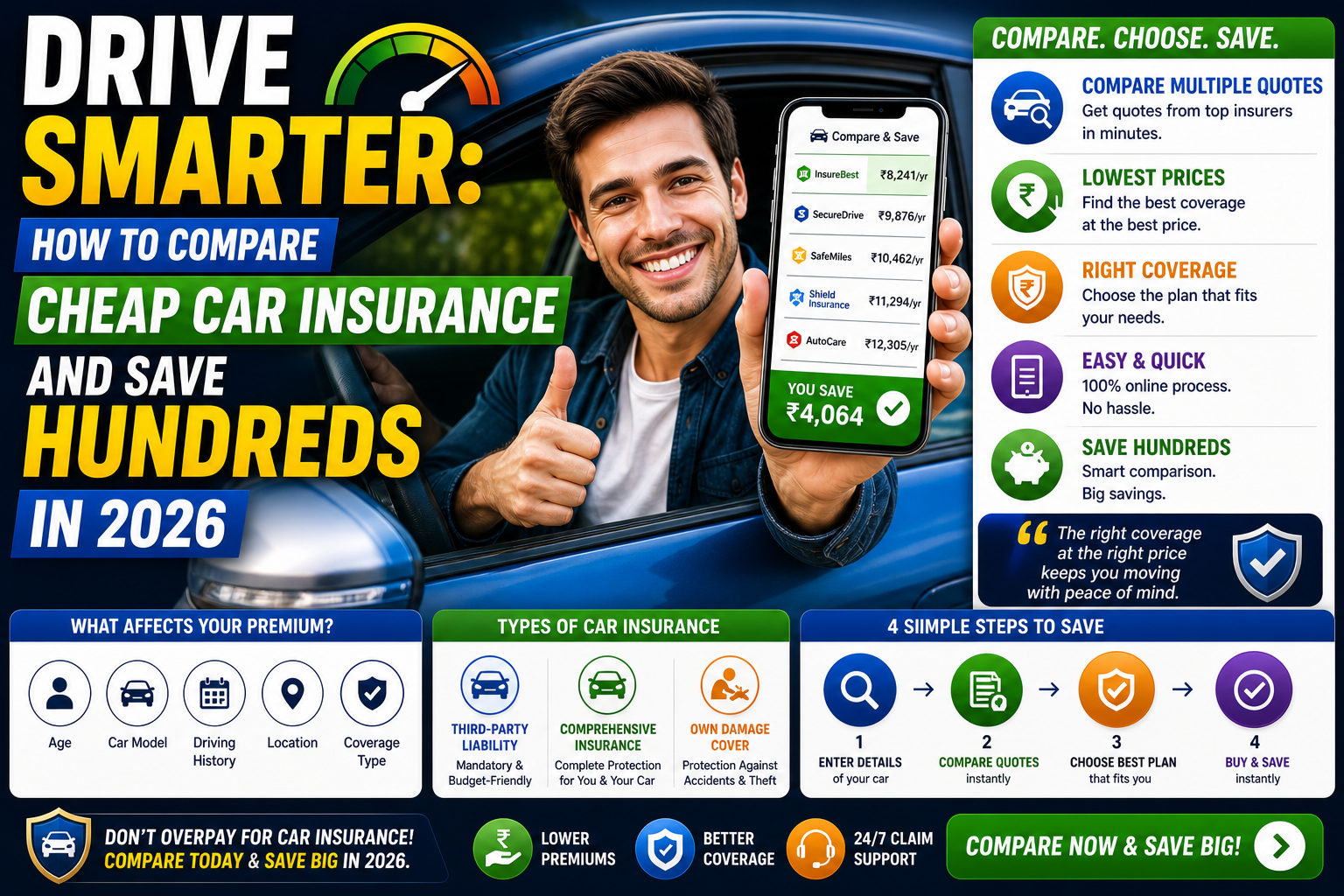
Navigating the 2026 insurance market? Learn how to compare cheap car insurance like a pro, decode hidden fees, and leverage new technology for maximum savings.
Table of Contents
Let’s be honest: paying for car insurance is right up there with filing taxes on the list of things most of us would rather avoid. We all know we need it, but seeing that monthly premium vanish from your bank account can sting, especially when the cost of living feels like it’s on a non-stop escalator. The good news? You don’t have to just accept the first quote that lands in your inbox. In 2026, the secret to keeping your hard-earned money in your pocket is knowing exactly how to compare cheap car insurance in a market that is more competitive than ever.
The insurance landscape has shifted significantly this year. While global premiums are stabilizing after a few volatile years, lenders are increasingly hungry for your business. They are using data in ways we haven’t seen before—looking at everything from your daily mileage to your smooth braking habits. If you haven’t taken ten minutes to compare cheap car insurance since your last renewal, you are almost certainly paying a “loyalty tax” that you don’t owe. It’s time to take the wheel and drive those costs down.
Why Comparison is Your Best Financial Ally
Think of car insurance like a mobile phone plan. Companies often save their best “introductory” rates for new customers, while long-term policyholders see their rates creep up year after year. When you compare cheap car insurance, you are effectively forcing companies to bid for your loyalty. It’s the ultimate way to ensure you aren’t subsidizing someone else’s risk.
But here is the trick: “cheap” doesn’t have to mean “bad.” You aren’t looking for the lowest price at the expense of actual protection; you’re looking for the best value. A policy that costs $30 less a month but has a $5,000 deductible is a financial trap, not a deal. To truly compare cheap car insurance, you need to look at the fine print as closely as the big numbers.
The 2026 “Tech-Factor”: Telematics and PAYD
The biggest change in how we compare cheap car insurance this year is the rise of usage-based insurance (UBI). In 2026, “Pay-As-You-Drive” (PAYD) and “Pay-How-You-Drive” (PHYD) policies have gone mainstream. If you are a low-mileage driver or someone who doesn’t treat every green light like a drag race, these tech-forward plans can be your golden ticket.
- Telematics Apps: Most major insurers now offer an app that tracks your driving. If you’re a safe driver, you can see discounts of up to 30% or 40%.
- Low-Mileage Perks: If you work from home and only use your car for grocery runs, make sure you compare cheap car insurance options that specifically cater to low-use vehicles.
I’ve seen drivers save hundreds just by switching to a plan that recognizes they aren’t on the road during high-risk rush hours. When you compare cheap car insurance, don’t just look at the brand name—look at the tech they offer to reward your specific habits.
Decoding the Different Types of Coverage
Before you hit the search engines to compare cheap car insurance, you need to know which “flavor” of coverage you actually need. Over-insuring is just as bad as under-insuring.
- Liability Only: The bare minimum required by law. It protects the other person if you’re at fault. If you drive a 15-year-old car worth less than your laptop, this is the fastest way to get a rock-bottom rate.
- Comprehensive Coverage: Protects against “Acts of God” like storms, theft, or hitting a deer. In 2026, with extreme weather events on the rise, this is often worth the extra few dollars.
- Collision Coverage: Covers damage to your car if you hit something.
As you compare cheap car insurance, look at the “Insured Declared Value” (IDV). This is the market value of your car. If you set your IDV too low to save on premiums, you’ll be disappointed if your car is totaled. Find that sweet spot where you’re covered for the real value of the vehicle without overpaying. You can find more technical details on how these values are calculated on Wikipedia’s entry on Insurance Rating.
Strategic Moves to Lower Your Bill
You have more control over your premium than you think. When you sit down to compare cheap car insurance, keep these three levers in mind:
1. The Power of the Deductible
Increasing your “Excess” or deductible is the most immediate way to drop your price. If you can afford to pay $500 out of pocket in an emergency, don’t take a $200 deductible. By taking on a little more of the risk yourself, you can compare cheap car insurance quotes that are significantly more attractive.
2. The No-Claim Bonus (NCB)
Your “No-Claim Bonus” is your best friend. In 2026, some companies offer “NCB Protection” add-ons. This means even if you have a minor scrape, you don’t lose that 50% discount you’ve spent years building. When you compare cheap car insurance, check if your potential new insurer will honor your existing bonus.
3. Safety and Security Add-ons
Does your car have a modern anti-theft system? Do you park in a locked garage? These small details matter. Insurers love a car that is hard to steal. Mentioning these features as you compare cheap car insurance can shave another 5% to 10% off the top. According to recent data from the National Association of Insurance Commissioners, security-conscious owners consistently see lower premiums.
Navigating Comparison Sites Like a Pro
Comparison engines are a massive time-saver, but they can be overwhelming. To effectively compare cheap car insurance on these platforms, you need to be precise with your data.
- Be Honest: If you had a minor speeding ticket three years ago, don’t hide it. The insurer will find out during the final check, and it could lead to a rejection or a sudden price hike.
- Watch for “Auto-Renewal” Traps: Many cheap plans have an auto-renewal clause that jumps the price after the first year.
- Check the Garage Network: If you choose a plan to compare cheap car insurance, make sure they have “cashless garages” in your actual neighborhood. Saving $50 on a premium isn’t worth a 50-mile tow when your car breaks down.
Comparing Regional Price Differences
It’s a frustrating reality: where you live dictates what you pay. In 2026, we are seeing major regional shifts. For example, UK car insurance data shows that while premiums are falling in most areas, Northern Ireland and London remain outliers.
If you’ve recently moved, you MUST compare cheap car insurance again. Your old rate is based on your old zip code. A move from a high-traffic city center to a quiet suburb could be the easiest $300 you ever save. Don’t let your insurer keep charging you “City Prices” if you’ve moved to the country.
The Importance of Customer Claim Reviews
I always say: insurance is only as good as the moment you actually have to use it. A cheap policy from a company that never answers their phone is a nightmare waiting to happen. As you compare cheap car insurance, look at the “Claim Settlement Ratio” (CSR). This is the percentage of claims the company actually pays out.
In 2026, the best digital-first insurers are boasting CSRs of over 95%. If a company is offering a suspiciously low rate but their reviews are full of people complaining about “hidden exclusions,” walk away. To truly compare cheap car insurance, you must weigh the price against the company’s credibility.
FAQ Section
1. How often should I compare cheap car insurance? The best practice is to shop around about 21 to 30 days before your current policy expires. This is when insurers are most aggressive with their “new customer” discounts. If you wait until the day before renewal, the system knows you’re in a rush and won’t offer the deepest discounts.
2. Can I get a discount for paying for the full year at once? Yes! Most insurers charge a “finance fee” for monthly installments. If you can afford the lump sum, you can often save 10% to 15% just by paying upfront. This is a vital step when you compare cheap car insurance for maximum savings.
3. Does my credit score affect my car insurance? In many regions, yes. Statistically, people with higher credit scores are seen as lower-risk drivers. If your credit has improved recently, it’s a perfect time to compare cheap car insurance and see if you’ve moved into a cheaper tier.
4. What is the “Step-Down” or “Loyalty” trap? Some companies offer a low introductory rate that “steps up” significantly after the first 6 or 12 months. When you compare cheap car insurance, always look at the renewal terms so you aren’t surprised by a massive spike next year.
5. Are online comparison tools free? Yes, they are free for the consumer. The websites get a commission from the insurer if you buy a plan. This makes them the most efficient way to compare cheap car insurance without spending any money on the search itself.
6. Is “Third-Party Only” always the cheapest? Usually, yes, but not always. Sometimes, because so many “high-risk” drivers choose third-party, insurers actually price comprehensive plans lower for safe drivers. It sounds counter-intuitive, but you should always compare cheap car insurance across both categories to be sure.
Conclusion
At the end of the day, car insurance is a necessary part of being a responsible adult, but it doesn’t have to be a financial burden. By taking the time to compare cheap car insurance, you are making a conscious choice to be a smarter consumer. You’re telling the big insurance companies that your money has to be earned through fair pricing and good service.
