
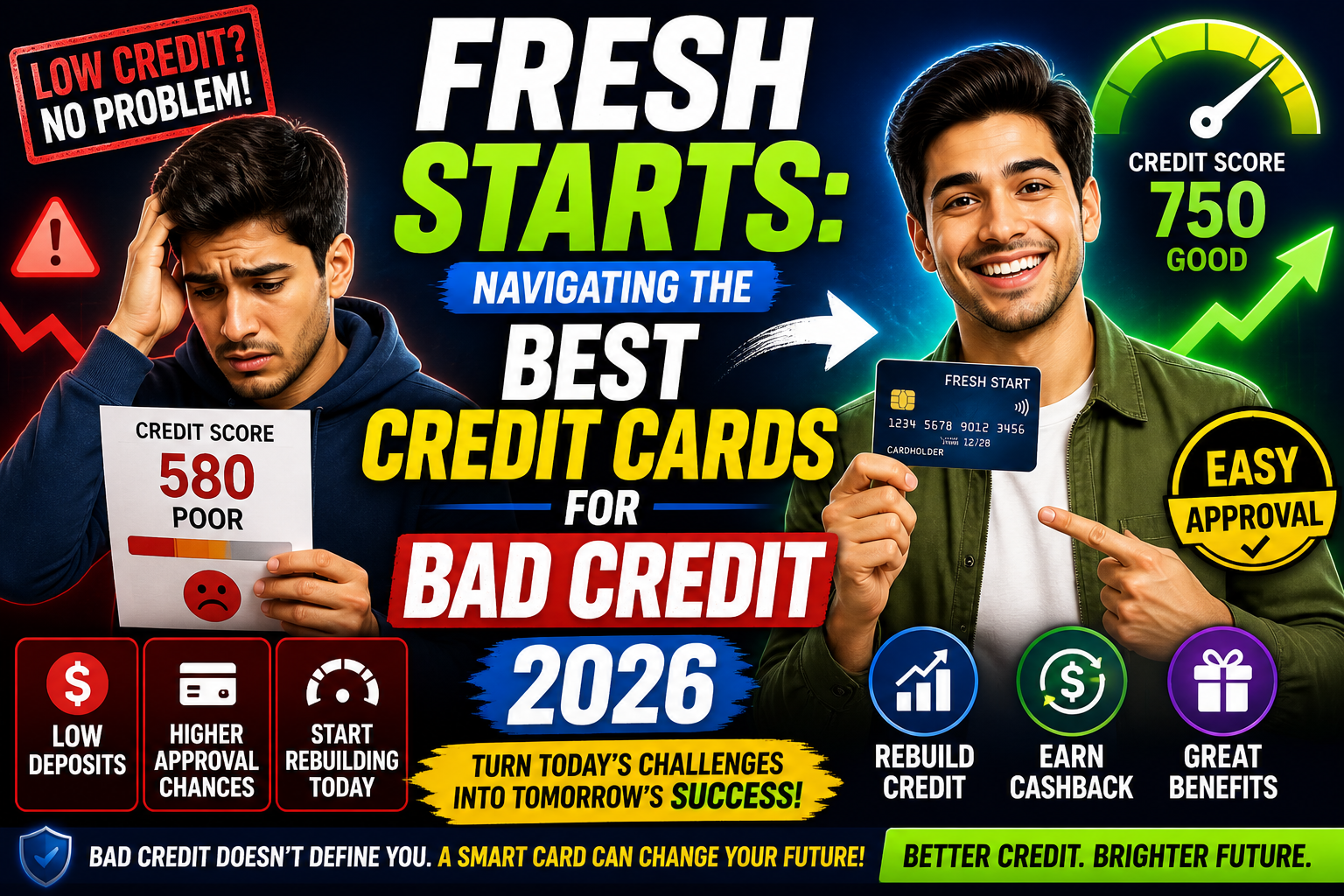
Striving for a financial comeback? Discover how to use credit cards for bad credit to rebuild your score, avoid predatory fees, and regain your financial freedom.
Table of Contents
Life has a way of moving faster than our finances can sometimes keep up with. One minute everything is fine, and the next, a medical emergency, a job loss, or a few missed payments leave you staring at a credit score that feels like a heavy weight. If you’ve ever been rejected for a basic apartment lease or a car loan, you know that “sink or swim” feeling. It’s frustrating and, honestly, a little bit isolating. But here’s the reality: your credit score is a snapshot, not a life sentence. In the 2026 financial landscape, there are more paths to a comeback than ever before, and the right credit cards for bad credit can serve as the primary tool for that rebuilding process.
I’ve sat across from people who felt like they were locked out of the financial system entirely. They thought that because they had a “poor” rating, their only options were predatory lenders with astronomical interest rates. Thankfully, that’s not true. The market for credit cards for bad credit has become incredibly competitive. Banks have realized that people looking for a second chance are often the most disciplined customers once they get the right tools. It’s about moving from “defense” to “offense” and using a piece of plastic to prove to the bureaus that you’re a responsible borrower.
Why a Credit Card is Your Best Rebuilding Tool
You might be wondering, “Why should I get a credit card if I’ve struggled with debt before?” It’s a fair question. However, credit is a game where you have to play to win. You can’t build a score if you aren’t using any credit. A specialized credit cards for bad credit option acts as a “reporting mechanism.” Every time you buy a tank of gas and pay it off immediately, that lender sends a positive note to the three major bureaus.
Over six to twelve months, those small, consistent “thums up” add up. You aren’t using these cards to buy a new living room set; you’re using them to manufacture a better reputation. The goal of using credit cards for bad credit is eventually to graduate to a standard card with lower rates and better perks. It’s a stepping stone, a bridge from where you are to where you want to be.
Secured vs. Unsecured: Choosing Your Path
When you start looking at credit cards for bad credit, you’ll generally see two main categories. Understanding the difference is vital for your wallet.
- Secured Credit Cards: These require a refundable security deposit (usually $200). Your deposit acts as your credit limit. Because the bank has your cash as collateral, they are almost guaranteed to approve you. These are often the best credit cards for bad credit because they have lower fees and help you build discipline.
- Unsecured Credit Cards: These don’t require a deposit, but they often come with higher interest rates or “monthly maintenance fees.” For some, the lack of a deposit makes these the preferred credit cards for bad credit, but you have to be careful with the fine print.
I usually lean toward the secured route. It’s essentially your own money, but it’s working for you in the background. Plus, most modern secured credit cards for bad credit will “graduate” you to an unsecured line and return your deposit after about seven months of on-time payments.
Avoiding the Predatory Fee Traps
The world of subprime lending can be a bit of a shark tank. When searching for credit cards for bad credit, you will encounter offers that look great on the surface but hide “application fees,” “program fees,” and “monthly service charges” in the fine print. I’ve seen cards where a $300 limit ends up being only $225 on day one because of all the fees they’ve already tacked on.
A legitimate credit cards for bad credit provider will be transparent. Look for cards with no annual fee if possible, or at least a very low one. If a card asks for $100 just to open the account, keep moving. There are plenty of reputable issuers—like Capital One, Discover, and even some local credit unions—that offer fair credit cards for bad credit without trying to bleed you dry before you’ve even swiped.
The Role of Reporting and Credit Bureaus
The only reason to get one of these cards is to have your behavior reported to Equifax, Experian, and TransUnion. Before you apply for any credit cards for bad credit, ensure the issuer reports to all three. If they only report to one, you’re only doing one-third of the work.
In 2026, many of the top credit cards for bad credit also give you a free dashboard to monitor your FICO score. Seeing that number tick up by five or ten points every month is a huge psychological win. It turns a chore into a game that you’re winning. You can learn more about how these reporting cycles work on the Consumer Financial Protection Bureau website, which is a goldmine for anyone navigating a financial recovery.
Strategy: The “One Purchase” Rule
To make credit cards for bad credit work for you, you have to change how you think about spending. I always recommend the “One Purchase” rule. Pick one small, recurring bill—like your Netflix subscription or your monthly water bill—and put it on the card. Then, set up an automatic payment to pay the card in full every month.
This ensures you are showing activity on your credit cards for bad credit without ever carrying a balance. In the eyes of the algorithm, you are a perfect borrower. You are using the credit, but you aren’t desperate for it. This “utilization ratio” is a huge part of your score, and keeping it low on your credit cards for bad credit is the fastest way to see results.
Capitalizing on “No-Credit-Check” Options
For those with a recent bankruptcy or very fresh collections, even standard credit cards for bad credit might be a reach. This is where “No Credit Check” secured cards come in. Companies like OpenSky or certain fintech platforms look at your bank account’s cash flow rather than your past mistakes.
These are excellent credit cards for bad credit for those who are truly starting from zero (or below zero). They provide the same reporting benefits without the sting of another hard inquiry on your report. For more context on how credit scoring models have evolved, Wikipedia’s entry on Credit Scores provides a great breakdown of the factors that lenders look at today.
The Importance of Pre-Approval Tools
In 2026, most major banks offer a “check for offers” tool. This is a must-use for anyone looking for credit cards for bad credit. It uses a “soft pull” to see if you’re likely to be approved without actually hitting your credit score.
Only submit a formal application once the pre-approval tool says you’re a match. If you just go around applying for every credit cards for bad credit offer you see, the multiple “hard pulls” will actually lower your score further. Be surgical. Use the tools available to ensure that when you finally do apply for those credit cards for bad credit, you’re walking away with a “Yes.”
Transitioning to Better Plastic
Your time with credit cards for bad credit should be temporary. Once your score crosses into the “Fair” territory (usually around 640-660), start looking for cards that offer cashback or travel rewards. Many people find that their original credit cards for bad credit issuer will eventually offer them an upgrade path.
Don’t close your old account immediately, though! The age of your accounts matters. If your first rebuilding card has no annual fee, keep it in a drawer and let it continue to anchor your credit history. The journey from credit cards for bad credit to “Prime” credit is a marathon, not a sprint, and every year of history helps.
Digital Security and Scams
When you’re in a vulnerable financial position, you might receive emails or texts promising “guaranteed” high-limit cards for a fee. Be extremely cautious. Legitimate credit cards for bad credit won’t ask you to pay via gift cards or wire transfers. Stick to well-known bank websites and check for the padlock icon in your browser. Your path to recovery shouldn’t involve being a victim of identity theft.
FAQ Section
1. How long does it take to see a score increase with credit cards for bad credit? Most users see an initial bump within three months of consistent, on-time payments. Within six to twelve months of using credit cards for bad credit responsibly, many see significant jumps that allow them to qualify for better financial products.
2. Can I get a credit card with a 500 credit score? Yes. You will likely need to look at secured credit cards for bad credit. Since these require a deposit, your credit score is less of a factor than your ability to provide the collateral.
3. What is the best credit limit for rebuilding? For most credit cards for bad credit, the initial limit is low, often between $200 and $500. While this seems small, it’s all you need to prove your reliability. As your score improves, many issuers will increase the limit on your credit cards for bad credit without requiring an extra deposit.
4. Are there any credit cards for bad credit with rewards? Believe it or not, yes! Cards like the Discover it® Secured offer cashback on gas and restaurants. Finding credit cards for bad credit that offer rewards is a nice bonus, but remember that the “real” reward is the improvement in your credit score.
5. Should I pay my balance in full or leave a small amount? Always pay in full. There is a myth that leaving a balance helps your score, but it only results in you paying interest. To maximize the benefit of credit cards for bad credit, pay the statement balance to $0 every single month.
6. Can I apply for credit cards for bad credit after bankruptcy? Yes, though you may need to wait a few months after your discharge. Secured credit cards for bad credit are specifically designed for this type of fresh start and are often the first step in post-bankruptcy recovery.
Conclusion
Navigating your way back to financial health can feel like an uphill battle, but you don’t have to do it empty-handed. The right credit cards for bad credit act as a ladder, helping you climb out of the hole one on-time payment at a time. It requires a bit of patience, a dash of discipline, and a clear understanding of the rules of the game.
