
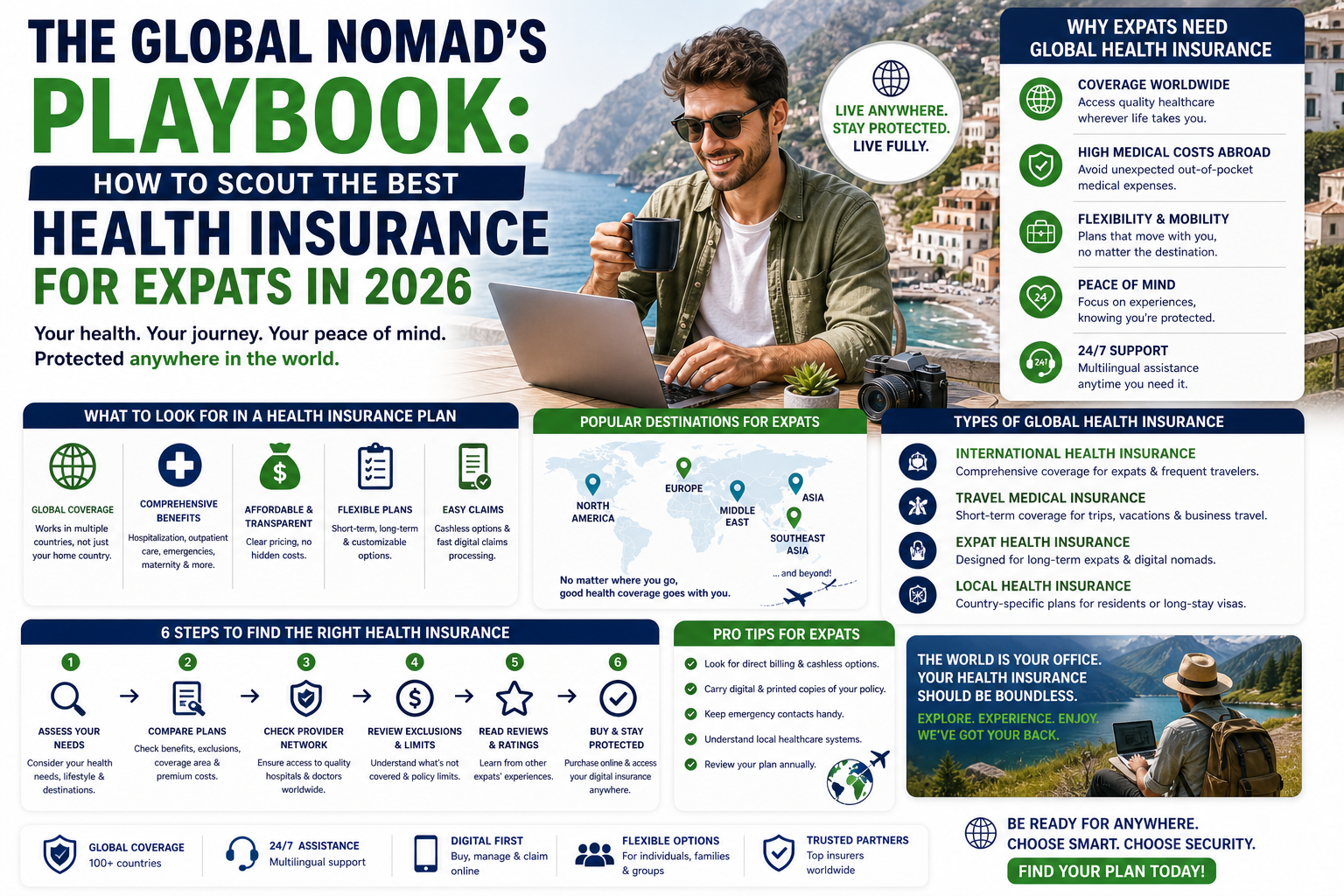
Navigating medical care abroad is tough. Our expert guide helps you find the best health insurance for expats, covering global coverage, costs, and top providers.
Table of Contents
Moving to a new country is an exhilarating whirlwind. You’ve got the visa sorted, the apartment deposit paid, and you’re already daydreaming about the local food scene. But then, reality hits in the form of a confusing question: “What happens if I get sick?” Most of us don’t think about hospital beds while we’re packing suitcases, but the difference between a smooth recovery and a financial disaster often boils down to one thing: securing the best health insurance for expats before you actually need it.
I’ve talked to countless people who assumed their local company plan would be enough, only to find out it didn’t cover them when they flew back home for a visit or decided to take a weekend trip to a neighboring country. The international healthcare landscape is a patchwork of different rules and costs. Navigating it requires a bit of savvy and a clear understanding of your own lifestyle. Whether you’re a digital nomad in Bali or a corporate executive in Dubai, finding the best health insurance for expats isn’t just about the lowest premium—it’s about ensuring you have a safety net that actually travels with you.
Why Your Home Country Plan Isn’t Enough
The biggest mistake newcomers make is assuming their domestic policy will extend its reach. Most national health systems are strictly tied to residency and taxes. Once you leave, that protection often vanishes. Even private plans from back home usually have “travel” limits that only cover emergencies for a few weeks.
If you are living abroad long-term, you need an International Private Medical Insurance (IPMI) policy. This is usually where you find the best health insurance for expats because these plans are designed specifically for people who don’t have a “home base” in a single medical system. They offer global portability, meaning if you move from Spain to Singapore next year, your coverage follows you. For a deeper dive into how these global systems interact, Wikipedia’s entry on International Healthcare provides a solid foundation.
Decoding the “Best” for Your Specific Lifestyle
There is no one-size-fits-all when it comes to medical care. What works for a single 25-year-old freelancer won’t work for a family of four with a history of asthma. When scouting for the best health insurance for expats, you have to look at your “Region of Cover.”
- Worldwide Excluding USA: This is often the sweet spot for many. Since US healthcare costs are astronomical, excluding it can slash your premiums by 40% or more.
- Worldwide Including USA: If you’re an American expat or plan to visit the States frequently, this is a non-negotiable part of the best health insurance for expats for you.
- Local/Regional Only: Best if you are 100% sure you won’t be traveling or moving again soon.
I’m a firm believer that the best health insurance for expats should always include “Medical Evacuation.” If you’re living in a remote area and need specialized surgery, the cost of a private medevac flight can exceed $50,000. Having the insurance company handle that logistics and cost is a literal life-saver.
The Pillars of a Solid Expat Policy
When you’re comparing quotes, it’s easy to get blinded by shiny brochures. To find the best health insurance for expats, you need to dig into the “Table of Benefits.” Look specifically for these four pillars:
- Inpatient Care: This covers hospital stays and surgeries. It’s the “big stuff” that could bankrupt you.
- Outpatient Care: Covers GP visits, specialists, and prescriptions. While common, adding this can significantly raise your premium.
- Chronic Condition Coverage: Many plans exclude long-term issues like diabetes or hypertension. The best health insurance for expats will offer some level of support for managed conditions.
- Direct Billing: You don’t want to be paying $10,000 upfront and waiting three months for a refund. Look for providers with a massive network of hospitals that bill the insurer directly.
Searching for the best health insurance for expats often feels like learning a new language. You’ll hear terms like “deductibles” (the amount you pay before insurance kicks in) and “cost-sharing.” Balancing these is the secret to getting a premium that fits your budget.
Top Providers to Watch in 2026
The market is currently dominated by a few heavy hitters who have spent decades perfecting the global nomad experience. If you’re looking for the best health insurance for expats, names like Cigna Global, Bupa Global, and Allianz Care are usually at the top of the list.
- Cigna Global: Known for its modular approach. You can pick and choose exactly what you need, which is great for budget-conscious explorers.
- Bupa Global: Often considered the “Gold Standard” for those who want premium, no-questions-asked coverage at the world’s top clinics.
- Allianz Care: Excellent for corporate expats and families who need robust support and a very user-friendly app for claims.
While these big names often provide the best health insurance for expats, don’t ignore the rising “Insurtech” challengers. Newer companies are using digital-first models to offer competitive rates for the younger, tech-savvy crowd. World Health Organization data often highlights the importance of standardized care, which these top-tier providers strive to meet across different borders.
Navigating Pre-existing Conditions
This is the toughest hurdle for many. If you have a medical history, finding the best health insurance for expats becomes a bit more strategic. You have two main options:
- Full Medical Underwriting: You disclose everything. The insurer might exclude your condition, charge an extra premium (loading), or accept it after a waiting period.
- Moratorium Underwriting: No health questions are asked, but anything you’ve had in the last five years is automatically excluded for the first two years of the plan.
For many, full underwriting is the way to get the best health insurance for expats because it gives you “certainty.” You know exactly what is covered and what isn’t before you ever set foot in a clinic.
The Impact of Your Destination on Premiums
Where you choose to live has a massive impact on your costs. Hong Kong, Singapore, and Dubai are notoriously expensive for healthcare. If you’re moving to these hubs, the best health insurance for expats will naturally cost more because the “claims cost” for the insurer is higher.
Conversely, if you’re heading to parts of Latin America or Southeast Asia, you might find that the best health insurance for expats is surprisingly affordable. However, always check the quality of the private hospitals in those areas. You want a plan that gives you access to the “international” clinics where English is spoken and the equipment is state-of-the-art.
Tips for Lowering Your Premium
You don’t have to sell a kidney to afford the best health insurance for expats. There are a few “pro-tips” to bring the price down without sacrificing safety:
- Increase Your Deductible: If you’re healthy, taking a $1,000 deductible can drop your monthly cost significantly. Think of the insurance as being for “emergencies only.”
- Choose Annual Payments: Most insurers give a 5-10% discount if you pay for the whole year upfront.
- Limit Outpatient Cover: If you’re in a country with cheap local GP visits (like Thailand or Mexico), you might not need a global plan to cover your coughs and colds.
Finding the best health insurance for expats is about being honest with your “worst-case scenario” and insuring against that first.
FAQ Section
1. Is travel insurance the same as the best health insurance for expats? No. Travel insurance is for short trips and usually only covers “emergency stabilization.” Once you are stable, they fly you home. The best health insurance for expats is designed for long-term living and covers ongoing care, specialists, and chronic issues.
2. Can I get expat insurance if I’m already abroad? Yes, most international providers allow you to apply regardless of where you are. However, it’s always better to secure the best health insurance for expats before you leave to ensure there are no gaps in your protection during the transition.
3. Will the best health insurance for expats cover me in my home country? Most IPMI plans include “Home Country Cover” for a limited time (usually 90 days per year). This is a vital feature of the best health insurance for expats because it allows you to see your regular doctors when you’re back for the holidays.
4. What happens if I move to a new country next year? The beauty of the best health insurance for expats is its portability. You simply notify the insurer of your new address. Your premium might change based on the local healthcare costs, but your coverage remains continuous.
5. Does expat insurance cover maternity? Most “best” plans offer maternity, but there is almost always a 10-to-24-month waiting period. You cannot buy the best health insurance for expats while already pregnant and expect the delivery to be covered.
6. How do I make a claim? Modern providers have made this very easy. For the best health insurance for expats, you usually just snap a photo of your receipt and upload it through their app. For larger hospital stays, you should always call their “Pre-authorization” line first.
Conclusion
Living abroad is one of the most rewarding things you can do, but it shouldn’t come at the cost of your health or your life savings. Scouting the best health insurance for expats takes a little bit of time and a fair amount of comparison, but the peace of mind it provides is priceless.
